Dooley Noted: 1/19/2014
Ever had a headache at the temples?
You might have been overly activating your jaw.
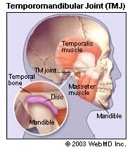
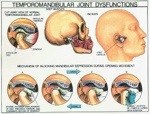
The temporomandibular joint (TMJ) is a complicated joint with enormous sensory information. This joint is where the skull meets your mandible (read: jaw).
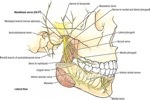
The innervation to the TMJ is provided by the nerves which also supply two of its muscles: the medial pterygoid and temporalis.
Not surprisingly, the temporalis muscle sits on the temple.
The posterior part of the joint is innervated by the auriculotemporal nerve, which helps you salivate and innervates the skin of your sideburns area.
The auriculotemporal nerve also innervates the ear skin.
If you are experiencing temporal headaches, get your jaw assessed. You may benefit from mouth guards, manual therapy, and motor retraining associated with the TMJ.
You may consider regular acupuncture or auricular acupuncture. Learning acupressure for your own ear can help send immediate feedback to the brain to diminish jaw symptoms.
Remember: the skin of the ear and the jaw are innervated by the same nerve. That’s no accident.
You may be a candidate for jaw assessment if you experience any of the following:
– jaw grinding
– jaw clenching
– jaw tightness/soreness
– stress internalizing
– gum chewing
– abdominal or gluteal weakness
– pain at top and back of neck
– excessive hunger
– excessive salivation
An overactive jaw not only creates jaw discomfort, but can inhibit important muscles from working in the kinetic chain above and below the jaw.
Unnecessary jaw tension is tension stolen from other important structures. If you go to the jaw first, your neck, low back, and hips can go unprotected.
Get assessed. Get corrected. Prevent problems you may not even associate with the jaw.
But as always, it’s your call.
– Dr. Kathy Dooley