Dooley Noted: 11/20/2014
Yesterday, I helped students remove 6 livers.
Unlike most internal organs, the liver is a particular challenge to remove.
The liver is anchored to your anterior abdominal wall by the falciform ligament. Its position can be altered by abdominal contraction.
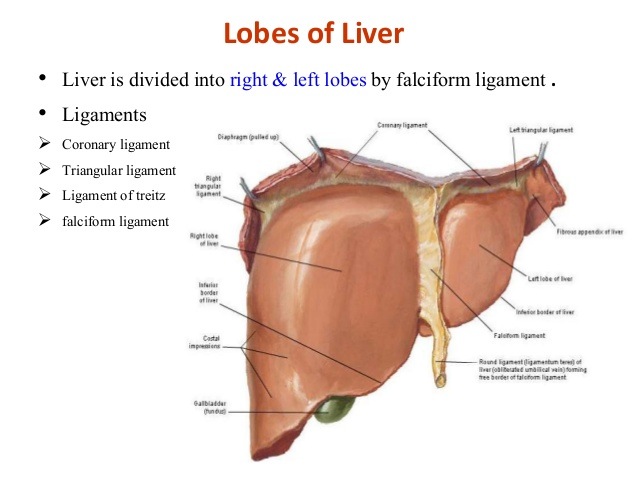
The liver is anchored to your stomach and duodenum by the lesser omentum. Their relative positions can affect each other’s ability to properly digest.
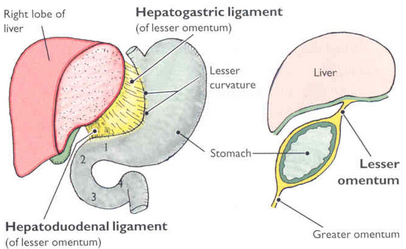
The liver is anchored to the inferior vena cava by the ligamentum venosum. The liver’s position affects venous return to the heart.
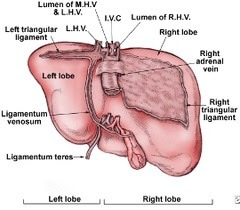
But by far the most impressive connection to the liver is the thoracic diaphragm. The other ligaments can’t compete with the strength of the coronary ligament and its triangular edges. These ligaments are nearly as tough as tendons!
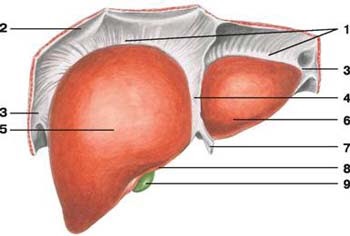
The students became easily exasperated, attempting to find enough room between the liver and diaphragm to cut this coronary ligament.
One student said poignantly, “It’s almost impossible not to cut the diaphragm when you cut this ligament!”
The liver’s intense connections to the diaphragm leave me convinced that diaphragm function affects liver function.
So yes, breathing affects the ways you process food, make hormones, and detoxify your system.
Breathing with full diaphragmatic contractions give the liver a type of mechanical massage. Like the heart, the liver’s immense connection to the diaphragm must not be ignored.
Yet, so seldom do people consider breathing to affect liver function!
So please, look at the pictures in this post and take a few deep breaths. Let your shoulders relax. Let your belly fill in 360 degrees on your inhale.
If you’re having trouble, give a good cough and try again. This will help the diaphragm rapidly stretch so you can shorten it on your next inhale.
With your breath, imagine the diaphragm’s connections to your liver. Think of the abdominal attachments to the liver.
Give that liver a mechanical massage with breathing, and help it function in an optimal manner.
As always, it’s your call.
– Dr. Kathy Dooley