Dooley Noted: 8/25/2015
I see my share of patients with jaw dysfunction.
What impresses me is that patients don’t just call it the jaw. They refer to the temporomandibular joint (TMJ) by its anatomical name.
Laypeople point right to the joint and its musculature. They have an understanding of its power and compensatory abilities when they have discomfort.
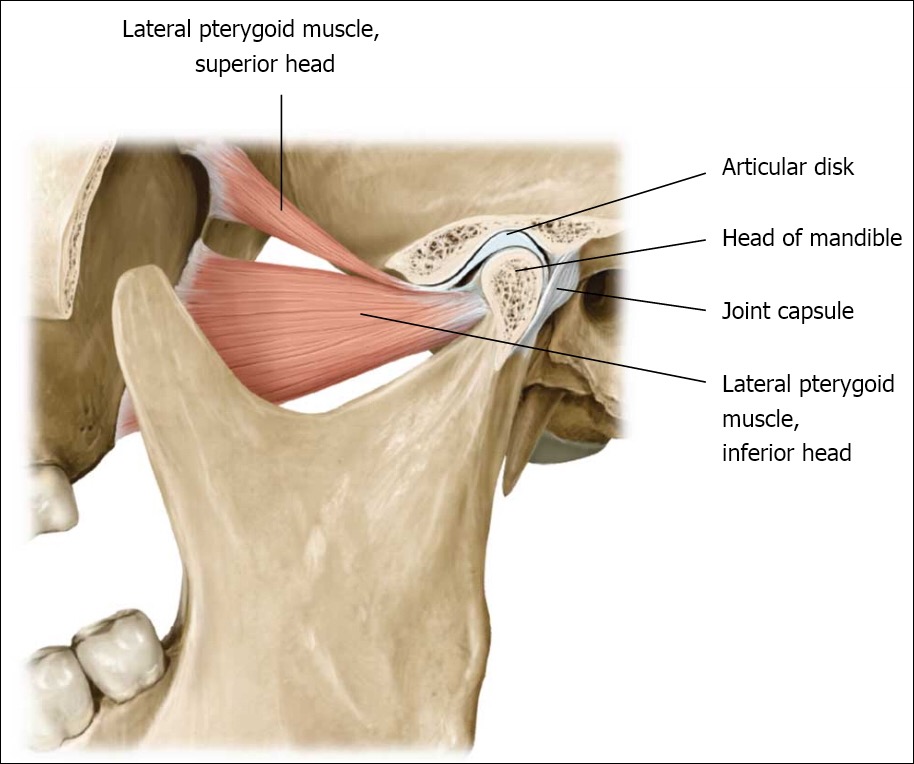
 They ask me every day: Why does the jaw take over for movements lacking elsewhere?
The jaw compensates for everything from glutes to deep neck flexion to pelvic floor dysfunction to abdominal stability.
Watch a heavy lift or a dysfunctional breather, and you will watch them clench, shift, and move the jaw in attempts to gain stability.

The TMJ is the go-to compensator because of its developmental centers.
Motor control involves mobility, stability, strength, balance, and equilibrium relative to where you are in space, a concept known as proprioception.
The most crucial input and output centers for proprioception (and thus, motor control) are located in your cerebellum.

The cerebellum is the smaller brain that deals with movement coordination and proprioception. It’s located below the brain’s occipital lobe, derived from a brain vesicle called the metencephalon.
Also deriving from the metencephalon is part of the brainstem called the pons. This is the part of your brainstem that innervates the TMJ.
In all its genius, your body loaded the TMJ with the most amount of proprioception per surface area of any other moveable joint.
The adage is true: Things that wire together, fire together.
So, when the cerebellum is missing motor control, it goes right to its brainstem brother, the pons.
So, your jaw can compensate for missing motor control in other parts of the body.
Look at the size of these axonal legs from the pons to the cerebellum. Imagine all the highway systems of the world packed into these legs, sending information in and out of the cerebellum to and from the pons.
The potential for communication is endless, making pons-innervated structures some of the body’s best compensators.
And when compensators are used long enough, they start to break down.
Your TMJ dysfunction is absolutely a compensation for motor control that is missing somewhere else in the kinetic chain.

And if it goes untreated, the structures will break down.
When they fail, the cerebellum may go looking for other connectors to its highway system, like the upper and lower pons and midbrain. When it does this, eye movement and facial expressions can become compensations, also.

 Get the medulla involved through its axonal legs to the cerebellum, and now the traps, palatal muscles, pharynx, and accessory jaw can get involved, as well as upper cervical musculature.
If you have TMJ dysfunction, make sure you see a quality movement professional that looks at your motor control as a system.
Your TMJ is not the bad guy. He’s the compensating guy.
Your overworked jaw is likely compensating for some missing components of motor control elsewhere in the kinetic chain.
Get assessed and corrected as a movement system. The sum is always greater than its parts.
As always, it’s your call.
– Dr. Kathy Dooley