Dooley Noted: 5/26/2016
The Person: Dr. Ralph Ger
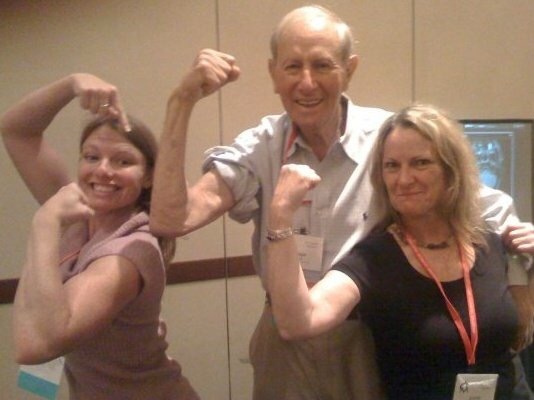
His profession: general surgeon and anatomist, founder of the American and British Associations of Clinical Anatomy, co-founder of the anatomy journal, “Clinical Anatomy”
How I met him:
My boss and fearless leader of the anatomy program of Albert Einstein College of Medicine, Dr. Todd Olson, introduced me to Dr. Ger, an Einstein professor emeritus.
After an afternoon of bonding over our mutual love for all things anatomical, I became a regular in Dr. Ger’s Long Island basement, where he taught me how he revolutionized muscular surgical flaps and was an inventor of the Herniastat, a surgical device for the treatment of inguinal hernias.
How he changed me:
Dr. Ger was the most humble and professional human I’ve ever met. He spoke of how he never had to amputate more than a few toes in decades of surgery in multiple countries.
He noted the improper surgical incision near the arcuate artery of the foot. He pointed out how the lateral toes would become necrotic if the artery of the great toe was cut too proximally. He noted that the surgeon would blame the disease process for the necrosis, instead of the improper surgical incision.
He described how inspired he was to keep anatomy education at the top of the hierarchy for all health professions.
Even though he was a highly decorated surgeon and professor, he never treated me as anything less than equal.
He took my hand one day and said, “You have to keep this information going. People are making grave medical mistakes because they don’t know their anatomy. People are losing limbs – even losing their lives – because the doctors don’t know anatomy enough. We have to help them.”
The world lost one of its best surgeons and best anatomy and surgical instructors when Dr. Ger died at age 91, just after I received my Masters degree in clinical anatomy.
But I think of him every day, when I describe to my patients how their structural issues don’t necessarily mean that they need surgical intervention.
I treat my patients as equals, explaining the anatomy so they can understand why they feel discomfort in their movements.
When teaching students, I point out the importance of the clinical anatomic relationships with as much animation and as many mnemonics as possible. I want to encourage them to ingrain the information into the long-term memory.
And we started our own anatomy seminar series, when we found out how little anatomic focus is taught outside of the medical classroom.
Every day is about carrying on the purpose of this great man who changed my life for the better.
Honor and acknowledge the people who’ve changed you.
As always, it’s your call.
– Dr. Kathy Dooley