
Dooley Noted: 6/30/2016
I ended up in the chiropractic rehabilitation business due to my own personal battles with panic attacks and anxiety.
I got a ton of advice back then. But the best thing I learned was to ignore most of it – and tune into myself.
After conquering my own anxiety, people suffering from anxiety seem magnetized to me.
They need help. And they aren’t just humans.
My husband and I adopted two anxious cats from a shelter, two brothers that were a bonded pair.
To take one, we had to take both. We didn’t hesitate.
My husband has the patience of a saint, and he has immense experience working with fostered animals.
But he noted he had never met two cats quite like Cubbie and Leahy.
Leahy cries all night.
Cubbie likes to hiss.
One month in, we couldn’t seem to really change their behaviors.
In their anxious moments, they would show strange behaviors.
And in a strong moment of separation anxiety, Cubbie skipped his litter box and used the restroom on our floor.
I learned just how anxious he was when I tried to pick him up, and he unleashed his feline fury upon my chest and elbow.


I turned to my Internet friends for some humble advice, only to get some pretty strange takeaways!
Here are some of my favorites:
1. “Exercise them.” That one made us laugh, since my husband and I are both obsessed with fitness.
2. “Hire a Cat Whisperer.” If anyone were a cat whisperer, it would be my Buddhist monk of a husband.
3. “Prozac.” Since I don’t suggest fluoxetine for humans, I couldn’t exactly promote giving it to my new feline children.
4. “Spray bottles.” Spraying our cats in the face did not make them less anxious.
5. We fielded the judgment, and even a few people insinuating we were “bad parents” or “impatient.” Now I know why people pretend their kids are perfect: they don’t want judgment.
So, we decided to shirk the advice and tune into our cats.
We opened our bedroom door when we went to bed at night. Leahy stopped crying.
We sprinkled some herbal anxiolytics on their food. They slept better.
We spent a little less time exercising them and spent more time on the couch, a safe zone for the cats. They cuddled with us incessantly.
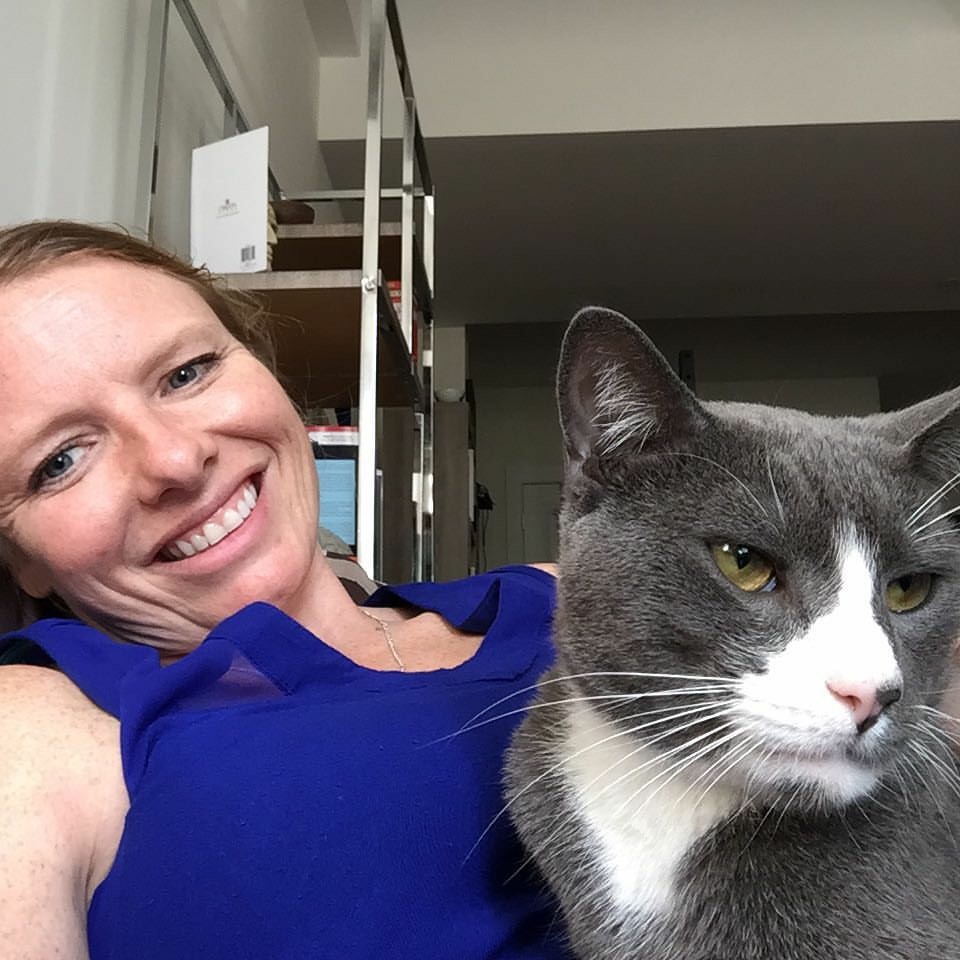
And this was just a few days after their behavioral issues hit a zenith.
I understand anxiety.
And they are anxious.
I normally teach breath control to patients with anxiety.
We can’t teach these cats breathing drills. But I can breathe with them as we cuddle and pet them.

These last few days since the attack have been a true lesson in handling the anxiety of someone who can’t talk back to you.
Their anxieties have brought my husband and me closer.
And I learned how they pick up on our changes in mood, and how much our reactions affect their anxiety.
We simply had to treat them as if they were humans in front of us with similar anxiety.
And after all the suggested remedies were considered, our own instincts seemed to win out.
As I knew I had to do with my own anxiety, I had to tune in.
Once I did, I felt their pain.
If the anxious seek you out, I hope you tune in instead of throwing every remedy at the problem.
Once you do, you’ll figure out how to truly help who seeks your care.
As always, it’s your call.
-Dr. Kathy Dooley