Dooley Noted: 7/4/2016
I have experience in dealing with patients that have grand mal (tonic-clonic) seizures.
These are some of the scariest for the observer, yet the sufferer often has little clue it even happened.
Overstimulating a brain prone to seizures can set them off like clock work. So, one must avoid overstimulation and take things easy.
This is doable, of course – unless it’s the very first one.
Today, we bought a wanded feather toy for our adopted cats.
Cubbie got overstimulated by the fun toy, and he started suffering a grand mal seizure.
As he laid on his side, I stabilized his head and did my best to comfort him. I knew we simply had to wait it out.
The long minute of seizure came to a close, and poor Cubbie was disoriented. We gently comforted him and gave him his space.
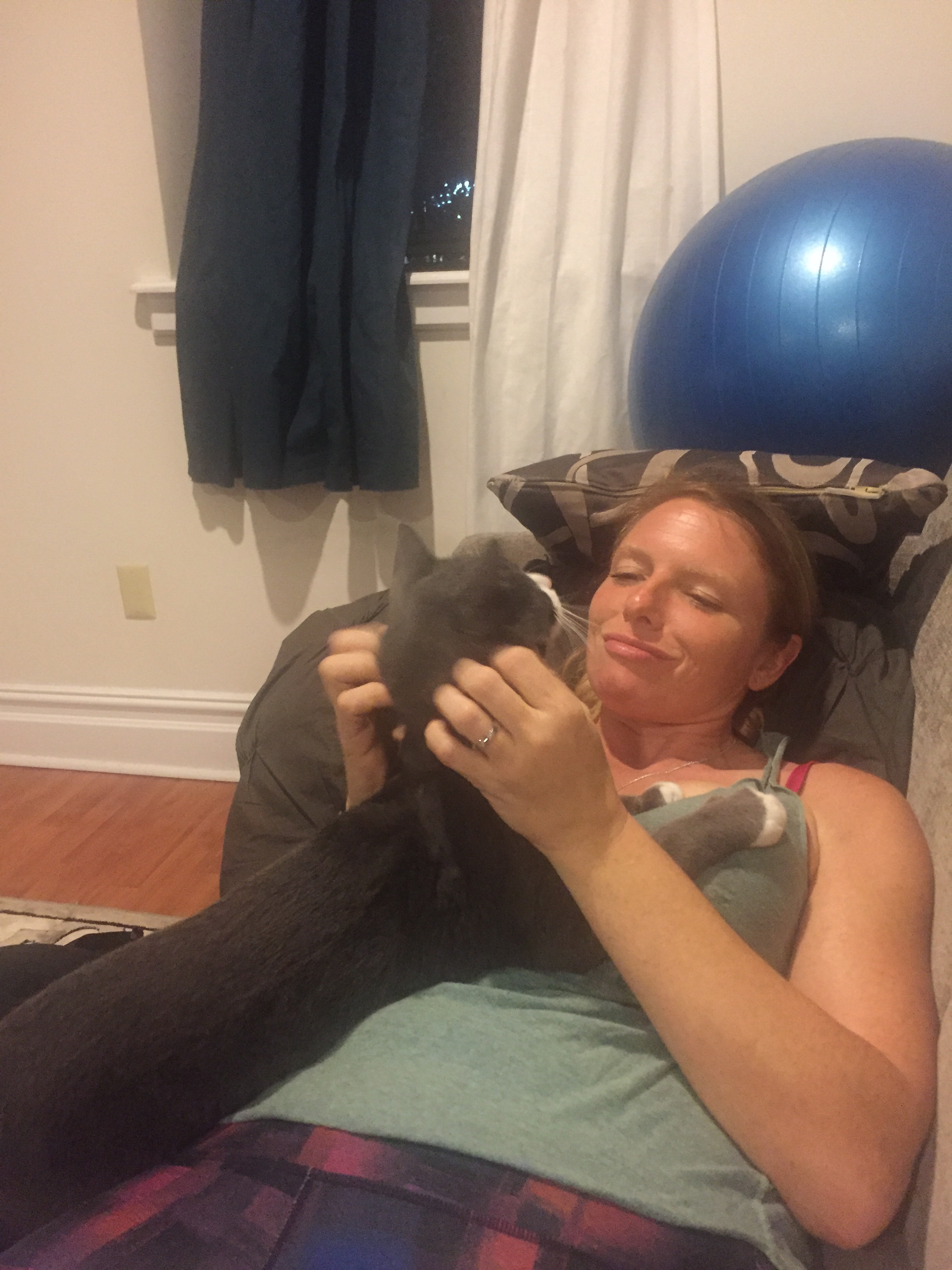
Not even 10 minutes later, he was cuddling me and even more affectionate than usual.
I have no clue if he has head trauma or congenital or primary epilepsy in his past.
His history is clear.
But I know he needs us in an even bigger way.
As he seized up, Jonathan and I were forced to seize up, too.
There wasn’t much we could do but wait it out.
And when Cubbie came to us again, all three of us were closer than before.
His brother, Leahy, pawed at his face to make sure he was okay.
And the four of us cuddled as a family, understanding how seizing up can also size up what your family means to you.
Jonathan and I are both trained to handle seizure. Now that we know Cubbie is a sufferer, we can help prevent it from happening again.
But if you have a living being around you that experiences seizure, note these tips:
1. Prevent overstimulating cerebral events (i.e., flickering lights).
2. During a seizure, never stick items in the sufferer’s mouth.
3. Make sure to place the sufferer on his side, and support the head.
4. Clear the surrounding of any debris that may be harmful to the sufferer, should he knock into it.
5. Watchfully wait. During most seizures, all you can do is make sure the sufferer is still breathing and is stabilized.
6. If the seizure lasts for more than a few minutes or repeats, get emergency help. If it dissipates and doesn’t return, medical attention is likely not needed.
7. A sufferer can choose anxiolytics and anti-convulsants for prevention of seizure, but many side effects result. Research and calculated decision-making must be considered, since most seizures are not life-threatening.
As I write this, cuddling with Cubbie, I urge you to be prepared if a seizure occurs to someone around you.
As always, it’s your call.
– Dr. Kathy Dooley