Dooley Noted: 6/26/14
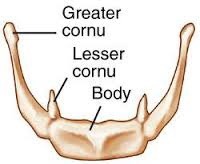
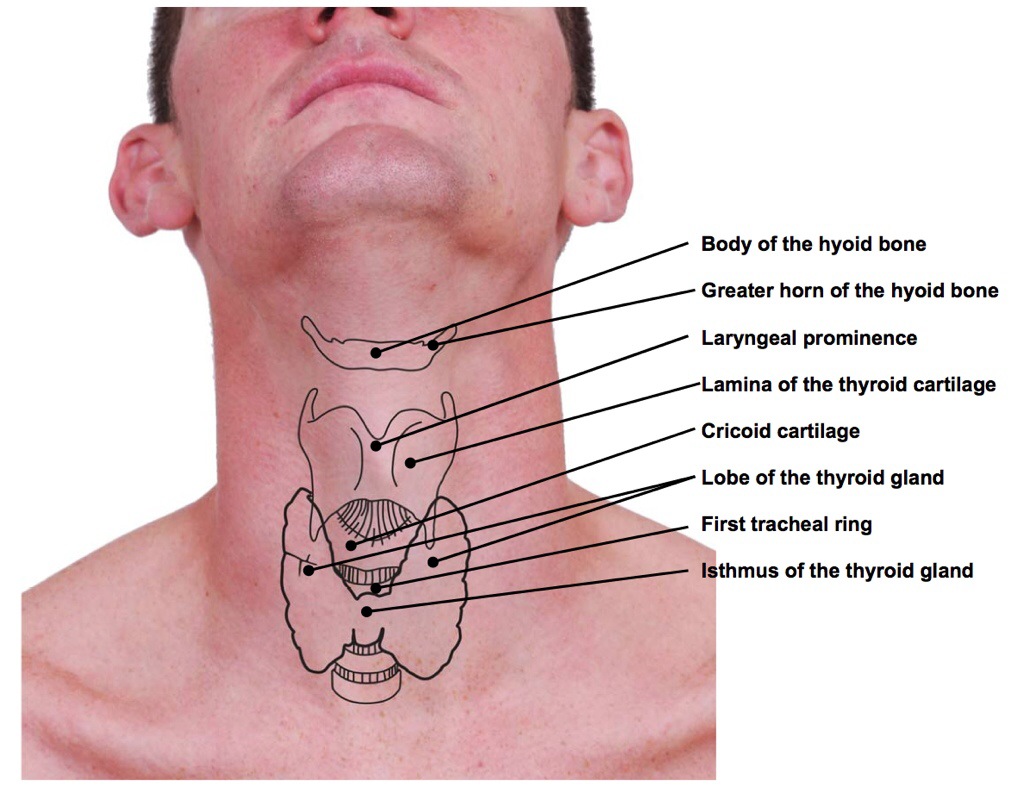
The hyoid bone is an incredible bone that is practically floating in space, just anterior to your C3 vertebrae. If you run your fingers directly under your chin, you will run into its body.
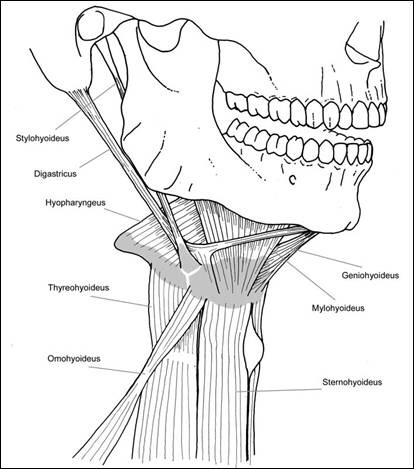
This incredible bone does not articulate with any other bones. It is anchored by muscular and ligamentous attachments. The hyoid attaches to the tongue, thyroid cartilage, pharynx, mandible (jaw), shoulder, skull, and sternum.
Due to it’s vast attachments, the hyoid helps to control tongue and throat movement, as well as laryngeal movement for speaking.
In a neutral head and neck position, the actions of hyoid musculature are optimized. Therein lies the challenge, since most people struggle to obtain neck and head neutrality.
A failure to obtain neutral position translates clinically as dysfunctional hyoid movement patterning. This can show in the following patterns:
1. Tongue deviation and thrust issues (due to hyoglossus)
2. Jaw deviation and tracking issues (due to geniohyoid, mylohyoid. And the sling that anchors the digastric muscles)
3. Swallowing issues (due to the middle pharyngeal constructor)
4. Breathing issues (due to infrahyoid musculature)
5. Shoulder issues (due to omohyoid)
6. Issues articulating speech (due to suprahyoid, infrahyoid, or jaw to hyoid attachments)
If you have unresolved issues with any of the above areas, make sure all 6 and their relationships to the hyoid are assessed.
Can hyoid positioning really affect swallowing? Yes.
Can swallowing really affect breathing? Yes.
Can breathing really affect shoulder movement? Yes.
The commonality of 1-6 is the hyoid, therefore it cannot be ignored in assessment.
Some common traumas (repetitive or incidental) to the hyoid may include, but are not limited to, the following;
1. Intubation during surgery
2. Being choked or choking
3. Acid reflux
4. Raspy voice
5. Inability to put each side of tongue on roof of mouth
6. Chin jutting
7. Forward head carriage
8. TMJ (jaw joint) dysfunction
9. Forcep birth
10. Chest breathing
If you have unresolved issues from 1-6 on the pattern list, feel free to share this link with your therapist to assure the hyoid had been assessed.
Hyoid positioning matters.
As always, it’s your call.
– Dr. Kathy Dooley