Dooley Noted: 4/29/2016
I’m having a beautiful, relaxing time teaching here in Grenada, West Indies, at St. George’s Med School.

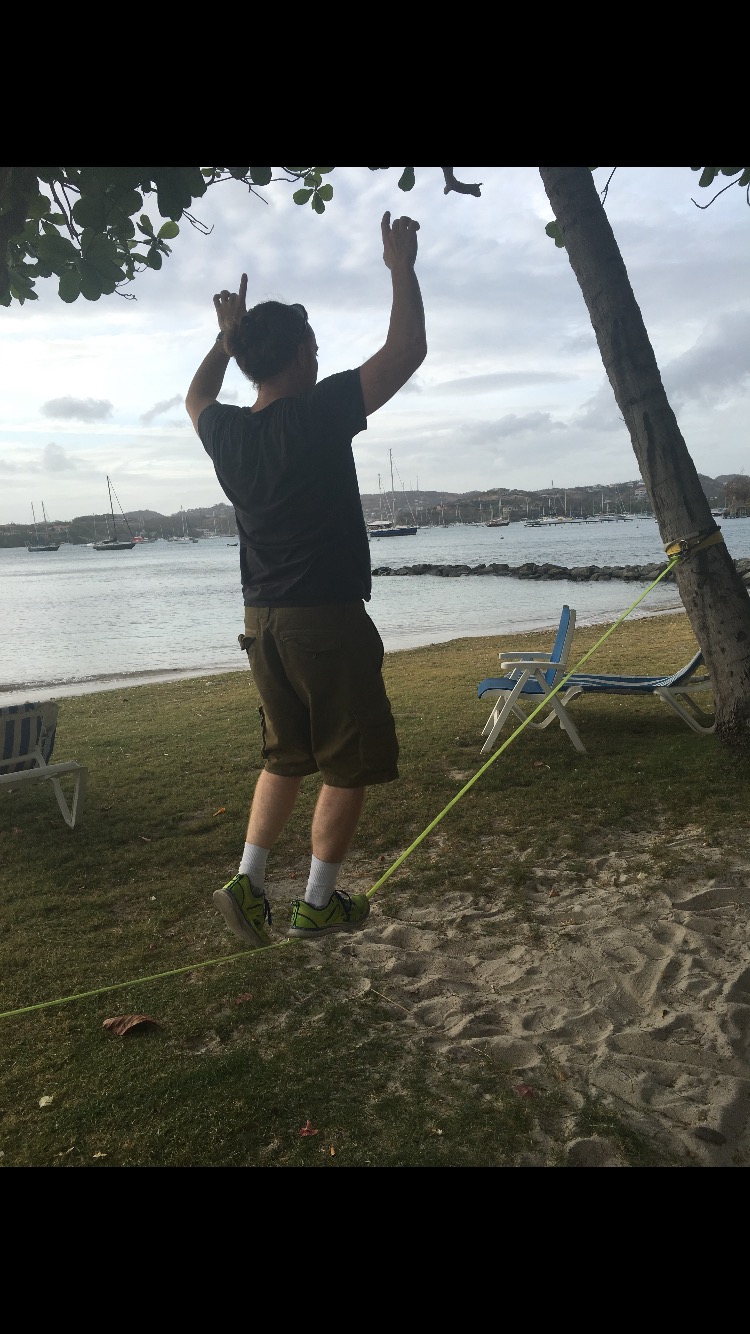
One of the amazing anatomy instructors, Ben Turner, offered to bring his slack line to the clubhouse so Jonathan and I could try it.
Ben was a marvel of proprioception, swinging back and forth and rarely losing his balance.
 As I stood on the slack line, I had to hold onto Jonathan for support to simply stand on that line!
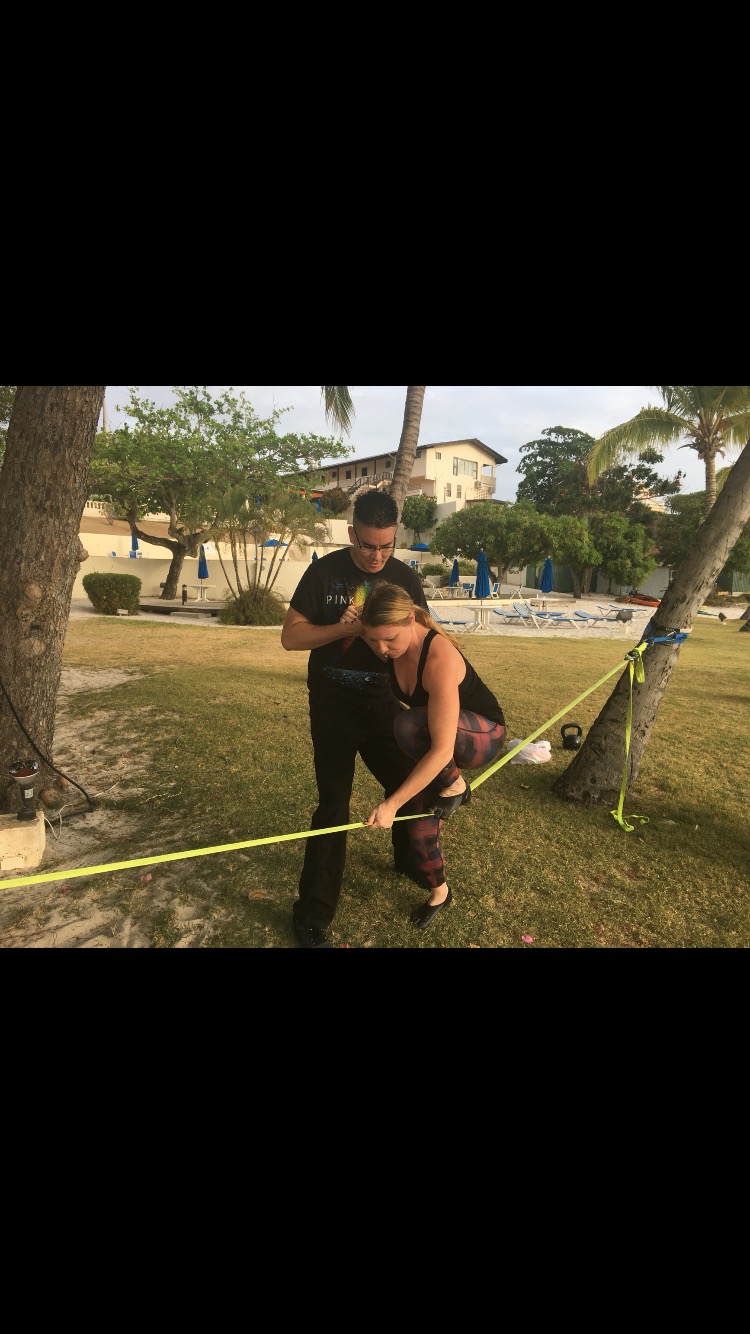
As we experimented with walking, standing, and bouncing on the line, I started banking all the things a one-inch slack line taught me in the hour.
1. Just because you can do it on the ground, it doesn’t mean you can’t improve. My pistol squat needs work! I had trouble finishing it on the line.
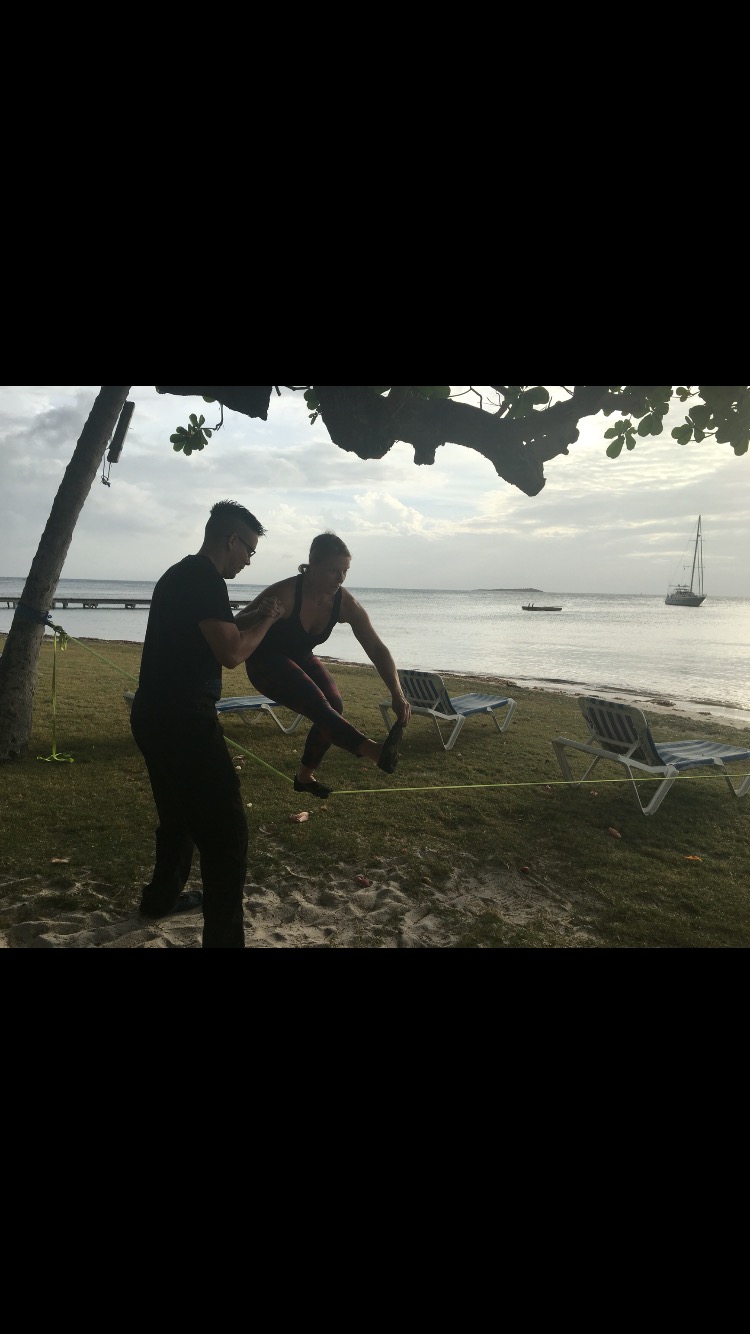
2. If you can’t do it just yet, lean on your partner for support. But don’t lose your tenacity – and take only the minimal support you need to do it on your own.
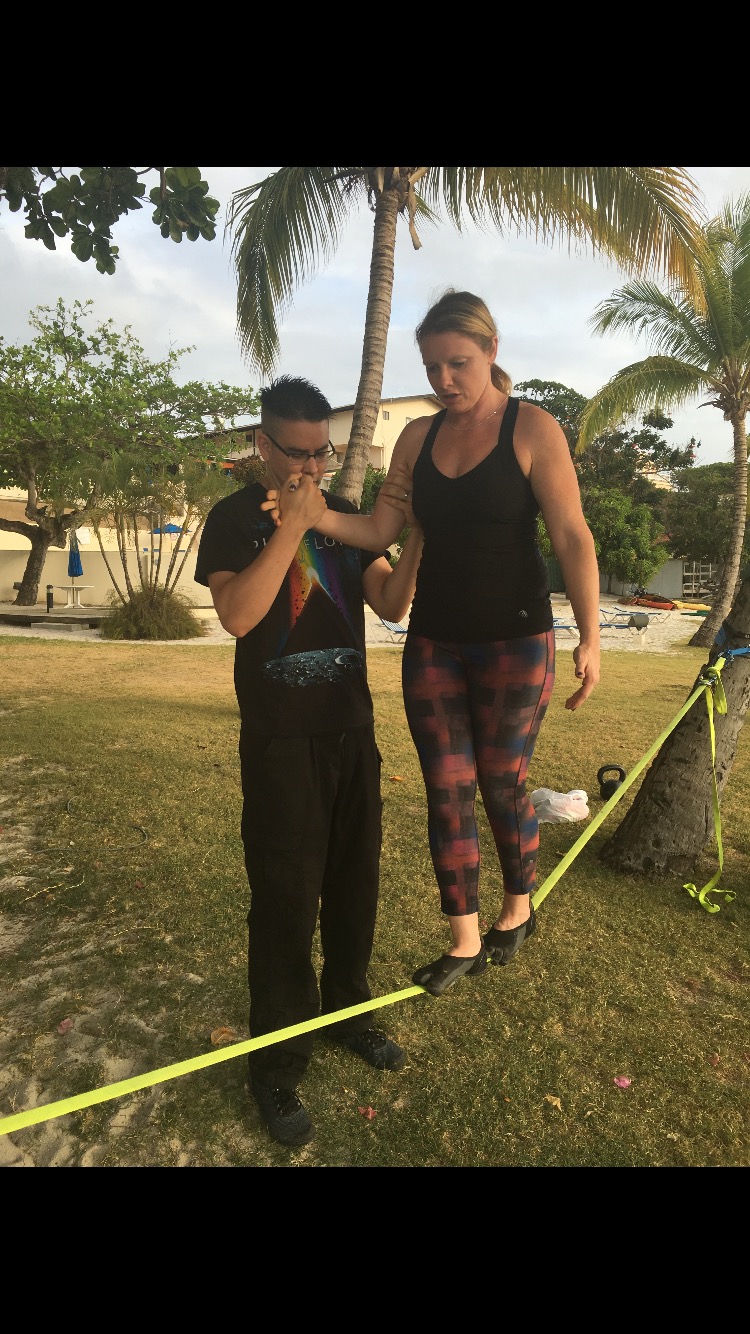
3. You understand exactly how important foot to core intrinsics are on the slack line. If your foot can’t read where you are, you can’t balance your center of mass over it. More proof that people need to get out of bulky shoes and into minimalist footwear.
4. Never look down nor back. Look ahead, and what you need to see will be caught in your visual fields. The eyes lead movement. Look down – and you’re going down.
5. Be tenacious. If you jump off because it’s too hard, you’ll never get better at anything.
6. Slow progress is still progress.
After some practice, I was able to stand by myself for a few seconds. Seconds add up to minutes, so start somewhere!
We were so inspired by Ben and his work that we decided to invest in our own line.
Don’t be surprised if you one day see me pistol squatting by myself on a slack line!
If you find a skill challenging, do it anyway.
Do all the things you aren’t initially proficient at completing.
You’ll open up cerebral pathways that would have been left undiscovered.
As always, it’s your call.
– Dr. Kathy Dooley