Anatomy Angel: Crawling

Dooley Noted: 4/2/2015 Crawling is a helpful activity to engage anatomy that can first stabilize you, then mobilize you.  Before you start your journey back to crawling, please remember this: the baby version of you spent the first four months earning the right to do it. You may need to earn back intrinsic trunk stability with the same breathing drills Baby You did back then.     After the trunk is stable, Baby You then primed … Read more
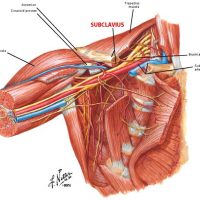
Anatomy Angel: Subclavius

Dooley Noted: 3/25/2015  Subclavius is an important muscle with a fairly misunderstood action and underestimated performance.  This important muscle is located exactly where its name indicates. It’s anchored directly under the clavicle, anchoring itself below to the first rib.  Since the anterior part of the first sternocostal joint is not synovial, the clavicle is pulled inferiorly by subclavius at the acromioclavicular joint.  Subclavius is misconstrued as a breathing muscle. Since the anterior first sternocostal joint … Read more

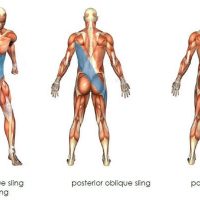
Anatomy Angel: Dorsal Sling

Dooley Noted: 3/4/2015 The dorsal sling is a functional movement system, mostly located on the back of you. This sling connects the latissimus dorsi to the opposite gluteus maximus, via the triple-layered diamond of thoracolumbar fascia. Through this system, we can transmit force generated from one foot to the opposite limb. This specific system helps us generate and transmit forces, especially for extension and gait. Stand up. I’ll wait. You used both sided dorsal slings … Read more

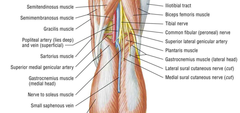
Anatomy Angel: Soleus

Dooley Noted: 2/20/2015 Yesterday, I helped reflect 8 soleus muscles. This thick, gorgeous leg muscle gets its name from its solefish-like appearance. Failing to cross the knee, it joins the knee-crossing gastrocnemius at the tendocalcaneus (Achilles tendon) to insert into the heel. Students are rightly nervous when reflecting this muscle. They know that precious anatomy lays deep to its surface. Soleus attaches to both leg bones, just inferior to the knee joint. It serves as … Read more

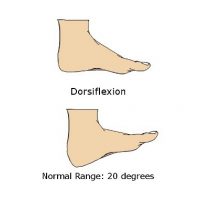
Anatomy Angel: Improving Ankle Dorsiflexion

Dooley Noted: 1/28/15 Every day I’m asked about how to improve ankle dorsiflexion (extension). I see many people hit the ground in half kneeling, pushing their kneecap toward a wall. They might be at that wall for a while. For the newcomers, ankle dorsiflexion is extension (increased angularity) of the talus (foot bone) relative to the tibia and fibula (the leg bones). Take the top of your foot towards the front of your shin. That’s … Read more

Anatomy Angel: Sternocleidomastoid

Dooley Noted: 1/15/2015 The sternocleidomastoid (SCM) is an amazingly powerful muscle. This muscle has attachments on the sternum in midline, as well as the medial one-third of the clavicle (collarbone). The SCM has a vast skull attachment, anchoring itself to the mastoid and superior nuchal line of the occipital bone. Like the trapezius, the SCM is innervated by cervical ventral rami masquerading as cranial nerve XI (spinal part of accessory nerve). So, the upper neck … Read more

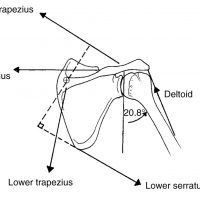
Anatomy Angel: Upper Trapezius

Dooley Noted: 1/9/15 The trapezius muscle is a fascinating muscle that assists with spinal movement and stability, as well as shoulder movement. This muscle gets its name from its trapezoid appearance. It originates from the skull, extending it’s length to the last thoracic (midback) vertebrae. It heads laterally to insert on the spiny, posterior part of the scapula (shoulder blade) and its peak-like acromion, as well as the clavicle (collarbone). The muscle is considered to … Read more

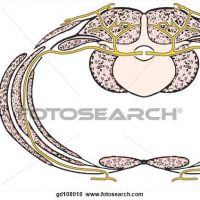
Anatomy Angel: Quadratus Lumborum

Dooley Noted: 12/30/14 The quadratus lumborum (QL) is a glorious muscle of the posterior abdominal wall. This muscle attaches to transverse processes of vertebrae L1-L4, anchoring itself inferiorly to the iliolumbar ligament and iliac crest. These attachments place the QL in perfect position to laterally stabilize the lumbar spine on each side, much like the cable stays of a bridge, like the one below. The QL also anchors itself below rib 12, a floating rib … Read more

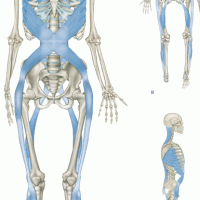
Anatomy Angel: Psoas Connections

Dooley Noted: 12/17/2014 Everybody on the planet seems to know where the psoas muscle group is located. And if one knows psoas, he most likely is stretching it. Imagining people stretching the psoas makes me cringe – mostly because this muscle falls apart in my hands during dissection. At this point, I’ve visualized and helped dissect around 850 of them bilaterally. To eccentrically load (stretch) this muscle, you have to involve many players that may … Read more

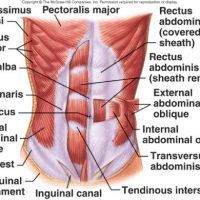
Anatomy Angel: The Missing Trunk Bursae

Dooley Noted: 12/11/14 Bursae are fluid-filled sacs located outside of a joint. In the cadaver, they look like fascial pockets. They are packed with synovium, a super-slippery lubricant that prevents excessive friction and erosion, usually at bone. I am convinced that the bursae are severely underestimated as pain generators. It explains why even after injections and anti-inflammatories, the pain quickly returns as you return to your movement patterns. Those strategies continue to irritate bursae, whose … Read more