Anatomy Angel: Anconeus and Elbow Lockout
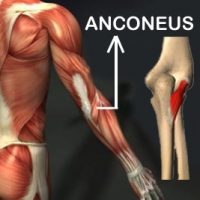
Dooley Noted: 6/9/2014 The anconeus muscle is an oft forgotten yet clinically relevant muscle in the elbow extension family. Listed under the lateral forearm compartment, anconeus is innervated by the radial nerve, the master of upper extremity extension. This muscle attaches to the humerus, radius, and ulna, and its name signifies it’s cone-like shape. Anconeus blends in with the triceps brachii and extensor carpi ulnaris, making it a great assistant for elbow extension and ulnar … Read more
Anatomy Angel: Ankle Movement

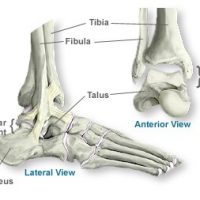
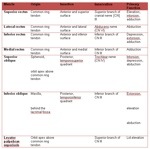
Dooley Noted: 5/29/2014 Everyone, please point to your ankle. I’ll wait. I’ll bet my bank account that the vast majority of people pointed to the bony prominence on the inside or outside of where the foot meets the leg. And you’re right! This is the talocrural, or leg-meets-foot joint. It’s also called the ankle mortise joint. This joint is responsible for dorsiflexion (true extension) and plantar flexion (true flexion) of the foot, respective to the … Read more

Anatomy Angel: Eye Movement

Dooley Noted: 4/30/2014 In all my time spent learning human movement, it was barely stressed in my education the importance of observing eye movement. Then, my NeuroKinetic Therapy level III training spent hours on it. I became fascinated with how eye movement is linked to global movement patterning. Six extraocular muscles rotate the eye along 3 movement axes. Four straight (rectus) muscles strap around the equator, north and south poles of the eye globe. Two … Read more

Anatomy Angel: Shoulder Stability and Neck Breathing

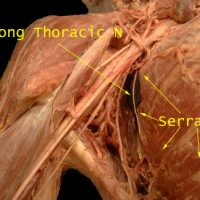
Dooley Noted: 4/24/2014 The serratus anterior is arguably the most important muscle for shoulder stability. This muscle attaches from the inside shoulder blade to the first nine ribs. It permits abduction and allows for both upward and downward rotation. Serratus anterior needs to be fixed at the ribs to stabilize the shoulder. If you use this accessory breathing muscle to respirate, then you can’t stabilize your shoulder. Other accessory breathing muscles include neck muscles, like … Read more

Anatomy Angel: Gall Bladder Referred Pain

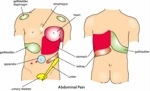
Dooley Noted: 3/14/2014 The gall bladder is a small organ on the liver’s inferior surface. It functions to store bile and chop your consumed fats into small pieces to aid their digestion. With the misconception of “healthy” low fat dieting, gall bladder pathology has been on the rise for decades. This causes the gall bladder to become sluggish and create stone formation. People at particular risk are the “4 Fs”: 1. Female (gender) 2. Fat … Read more

Anatomy Angel: Sinus Congestion

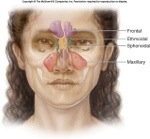
Dooley Noted: 3/7/2014 You may think you need to learn skull anatomy like you need a hole in the head. But if you know your sinus anatomy, you understand you already have several! Paranasal air sinuses are naturally occurring holes in the skull. They are designed to keep the skull lighter. Meanwhile, they filter, moisten and warm the air entering the skull. Since they are lined with mucosa, they are privy to increasing secretions in … Read more

Anatomy Angel: True Hamstrings

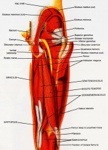
Dooley Noted: 3/2/2014 The five muscles of the posterior thigh are often collectively regarded as “hamstrings.” They tend toward tightness, and people LOVE to stretch what is tight. Before you stretch, you may want to learn more about what you are stretching – and consider why they are so tight all of the time. The five muscles often deemed as hamstrings include the following: 1. Short head, Biceps Femoris (BF) 2. Long head, Biceps Femoris … Read more

Anatomy Angel: Sciatica

Dooley Noted: 2/22/14 I’m in the class of therapists that sees a fair share of sciatica. Sciatica tends to be a blanketed term for leg pain. While I love people using anatomical and clinical terms, let’s learn what true sciatica represents. The sciatic nerve is a massive nerve about the size of your thumb. Wedged between the ischial tuberosity (read: sit bone) and greater trochanter (read: large outer thigh bump), this nerve supplies electricity to … Read more

Anatomy Angel: Brachialis

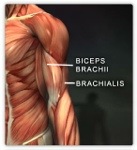
Dooley Noted: 2/12/14 The unsung hero of elbow flexion, brachialis is a muscle that can flex the elbow in any position. Deep to the biceps brachii, brachialis is the wingman of the biceps. He sits deep and lateral, shoving the biceps up to the surface, where biceps can take all the elbow flexion glory. But, we know better. Brachialis is not a beach muscle, but he is the one helping you through many hard times. … Read more

Anatomy Angel: Rotator Cuff

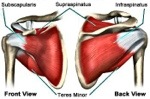
Dooley Noted: 2/7/2014 The entire universe seems to know some anatomy when it comes to the rotator cuff. But how well do you know how it plays a part in the big picture? The rotator cuff muscles: Supraspinatus Infraspinatus Teres Minor Subscapularis These four muscles prevent anterior and inferior dislocation of the humerus, relative to the scapula’s glenoid fossa. In simpler terms, they help keep the shoulder stabilized. These muscles are not the only rotators … Read more